The Real AI Race Is in Silicon
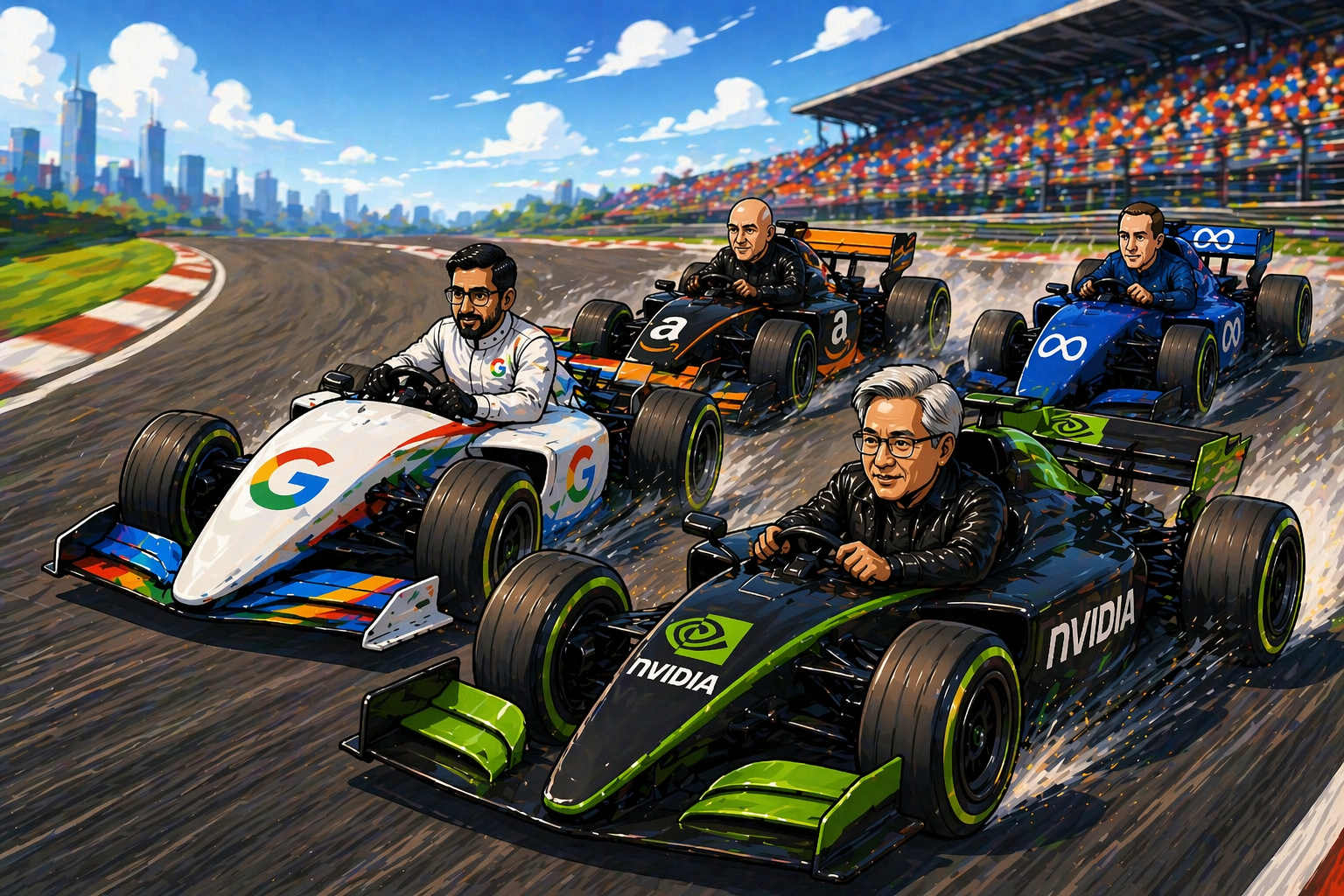

The rise of AI creates a new paradigm in software as well as in hardware engineering. AI models need heavy computation to produce better results, and for this there was only one company that had a clear control over the market - NVIDIA. But now we are seeing a lot of competition emerging. Companies have started building chips, and there are two main reasons behind this: 1. Control and 2. Companies are seeing more profit at the infrastructure level of AI.

In the last few weeks we have seen that Google has open-sourced their model Gemma, and this was perfect timing to release an open-source model. A few days later, Google released a new version of their TPU. When you see major companies jumping into open-source models, it is obvious that their major revenue generation is not focused on AI - they are playing a larger game to create a monopoly in the chip market. This clearly shows the market shift that is happening.
This is happening all across the industry. No doubt NVIDIA is ahead in this race, but Apple has spent a significant amount of time refining its custom silicon and integrating it with hardware and software to have better control over performance and efficiency. Google has invested in its TPU - we have already discussed that. Amazon is also building custom chips to support its AI cloud offerings, as it is already a major player in cloud services.
The bigger picture, as I see it, is that AI will not be a major revenue stream for big companies - but chips will be. Google launching their open-source model a few weeks before the launch of their TPU is a clear sign.
Why It Matters:
Whoever controls compute controls who gets access to AI - at what cost, at what speed, and on whose terms. As AI becomes infrastructure, the chip layer becomes the most strategically important part of the entire stack. Software can be copied. Silicon cannot.
Open-source models change the dynamic entirely. When the model itself is free, the competition shifts to who can run it cheapest and fastest. That's a hardware problem. Google releasing Gemma days before a new TPU isn't a coincidence - it's a playbook. Give away the software to sell the infrastructure underneath it.
For any company planning to run AI at scale, the infrastructure decisions made in the next two years will determine costs for the decade after. The model you pick matters less than the compute provider you're locked into - and the chip race has only just begun.