Agents are at work
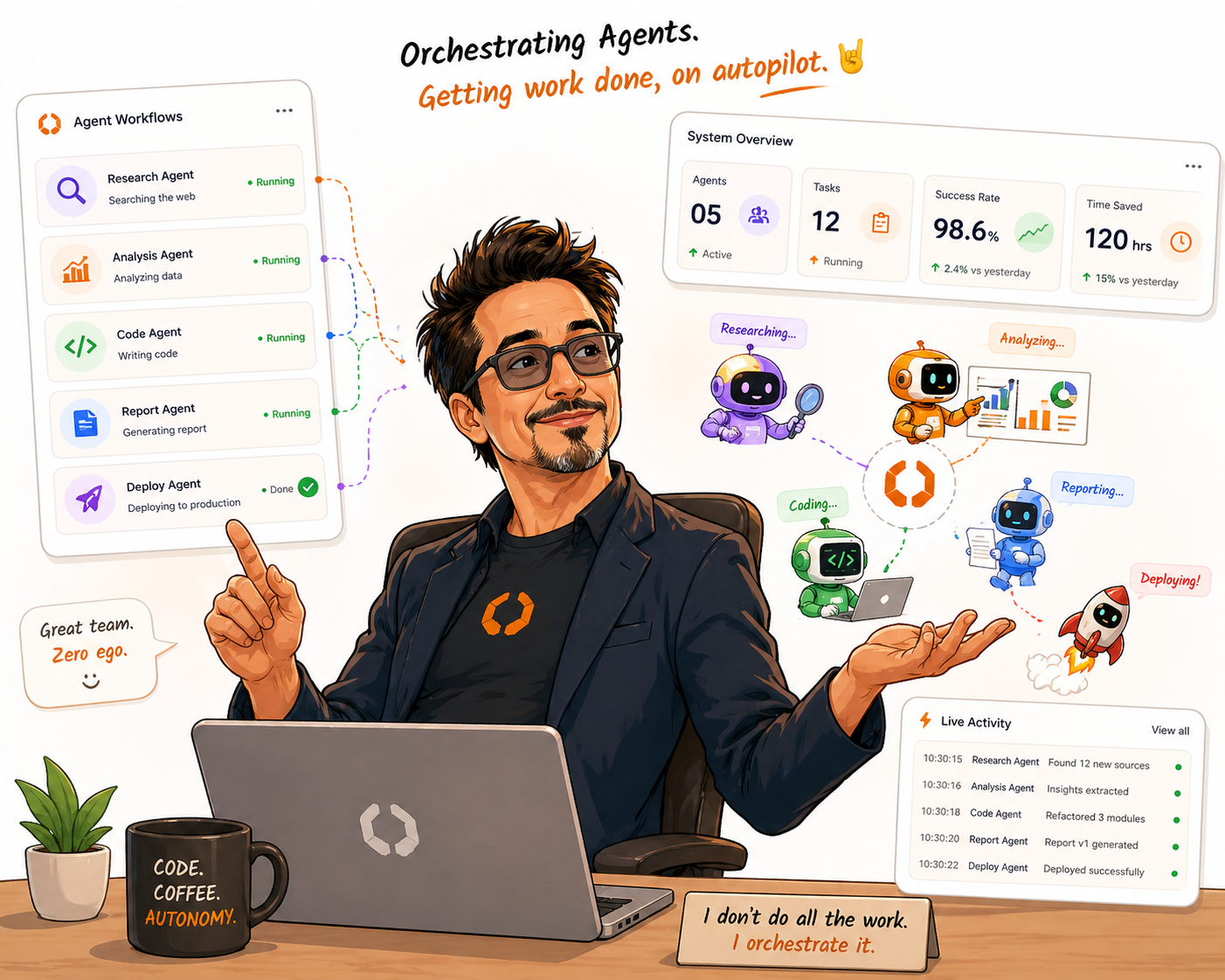
The era of agents is here. While everyone is talking about AGI (Artificial General Intelligence), most of the actual work is being done by agents. They can read documents, search the internet, and make a plan and execute it. With this, most tools now support multi-agents - so when agents with speciality in different skills work together, they form better results. Their reading capability is faster than any human, and they can run iterations on work much faster too.
If you look around, we talk about which AI models are best by looking at benchmarks - which we don't quite understand - but every new release claims to be the best model in the market. The new releases in Claude Opus 4.7 and GPT-5.5 are really impressive. But in reality, these models work best when used with agents.
With the current release of new models and their new capabilities, code generation has improved significantly. Google launched Antigravity, Microsoft is adding new agents to Copilot, Anthropic has Claude Code for autonomous coding, and OpenAI has Codex. The signal is clear - every major company is betting that the next developer is not a person typing code, but an agent writing it.
The surge in AI agent adoption reflects a fundamental mindset shift - recognizing AI not just as a chat tool, but as a productivity system. The job is no longer to do mundane tasks, but to orchestrate a team of specialized AI agents to achieve a goal. A growing share of the internet is now driven by agents.
The most telling sign of this shift is OpenClaw - an open-source AI agent built by a solo developer that hit 364k GitHub stars in April 2026, making it the most starred repository in GitHub history. It runs on your own machine, connects to WhatsApp or Telegram, and just gets things done - booking, coding, emailing - without being asked twice. When a side project built by one person becomes the most starred project in GitHub history, you know something fundamental has changed.
Agent orchestration has arrived - where multiple agents work together to provide better results, even aiming to achieve peak intelligence. As Saurabh Tiwary, VP and General Manager of Cloud AI at Google Cloud, puts it: “By 2026, agents will manage complex, multi-step workflows across systems. A key responsibility of employees will be to set the strategy and oversee the system of agents responsible for tasks, such as invoicing and contracting.”
Why It Matters:
The shift from AI as a chat tool to AI as a productivity system is not a gradual upgrade - it's a change in what "doing the work" actually means. The job is no longer completing tasks yourself. It's knowing which agents to assign, how to structure the instructions, and where human judgment still needs to stay in the loop.
A skill gap is already opening between people who understand how to direct agents and those who don't. Writing clear, structured instructions - the kind that an AI can actually execute without ambiguity - is becoming as foundational as knowing how to use a spreadsheet or write an email.
The revenue surge at Anthropic and OpenAI, SpaceX adopting Cursor, 364k stars on a solo-built agent in a single month - these are not coincidences. They are all pointing at the same thing. The market has already decided. The question is whether you're building the skill to keep up with it.