Agentic AI Is Finally Reaching Production
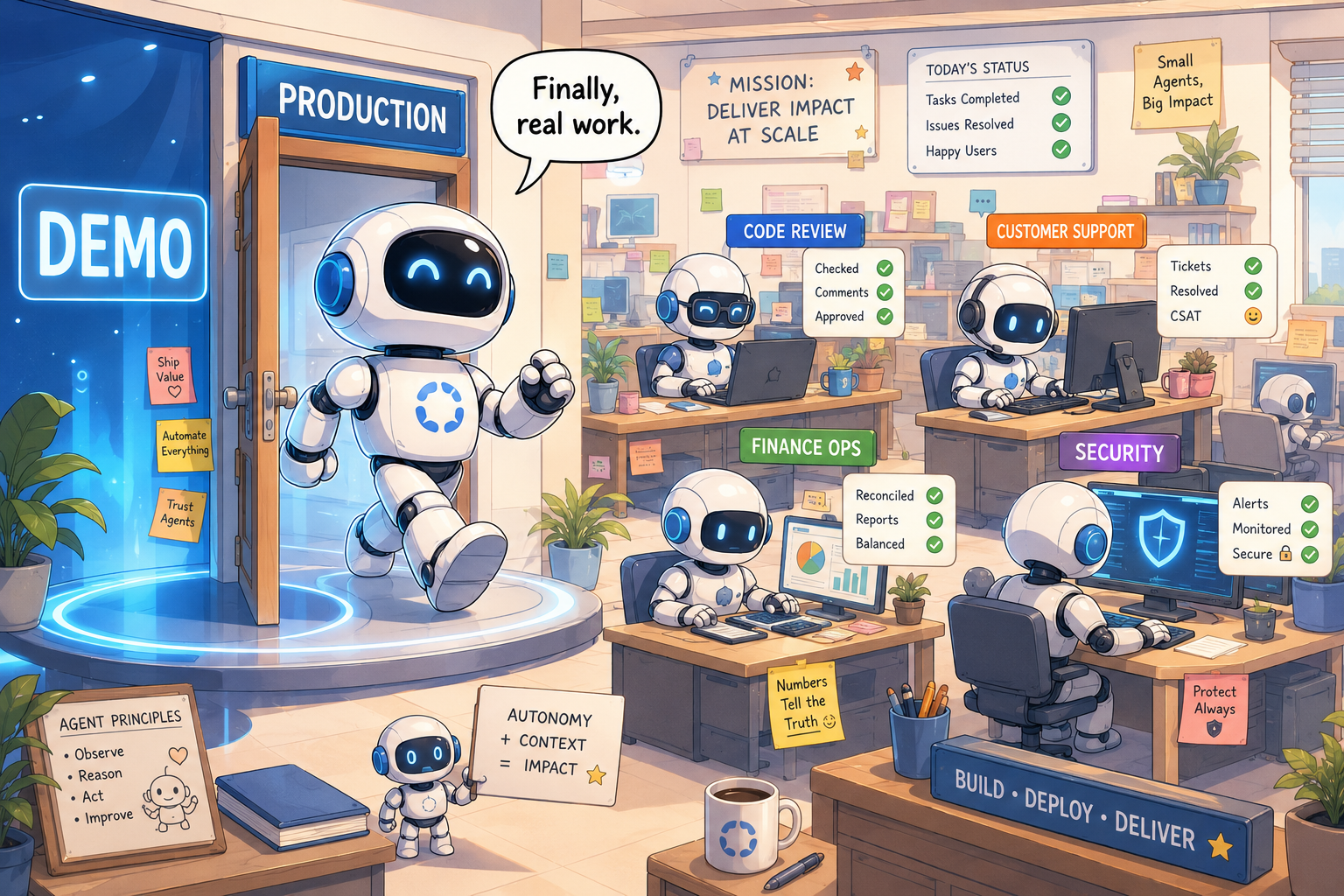
For the last two years, AI agents have mostly lived in demos.
We watched videos of AI booking flights, writing code, managing spreadsheets - completing multi-step tasks with barely any human input. The vision was clear: software that doesn't just answer questions but actually gets work done.
The reality was messier. Early agents were slow, expensive, and unreliable. A single hallucination could break an entire workflow. Companies experimented heavily but struggled to move agent-based systems into production. The gap between demo and deployment was wide.
That gap is closing.
Modern AI agents can access tools, query databases, call APIs, write code, browse documentation, generate reports, and make decisions across multiple steps. Instead of producing a single answer, they execute workflows. A customer support chatbot might answer a refund question. An AI agent verifies the order, checks company policies, processes the refund, updates records, and notifies the customer - all in one pass.
The difference is not intelligence. The difference is action.
What changed? A few things at once. Frontier models have gotten significantly better at reasoning and tool usage. Agent frameworks have matured - developers now have real tooling for orchestration, memory management, monitoring, and human oversight. And organizations have learned where agents actually create value: not full autonomy, but narrow, high-impact workflows.
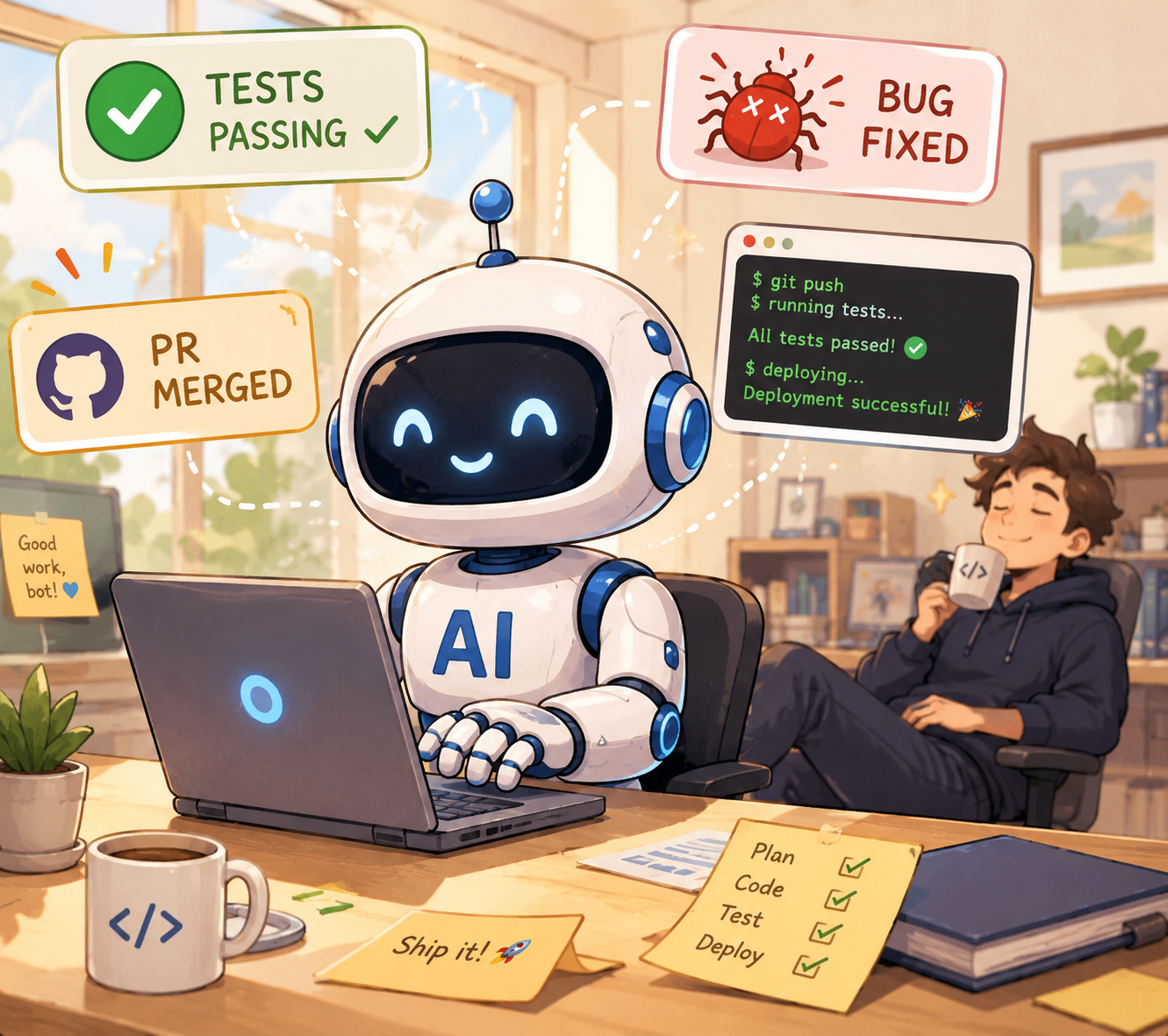
Software engineering is the clearest example. Coding agents can generate code, run tests, investigate bugs, and assist with code reviews. The developer's job is increasingly to supervise the workflow, not perform every step manually. Anthropic has Claude Code, OpenAI has Codex, Microsoft keeps expanding Copilot agents. Every major player is betting that the next developer is not a person typing code, but an agent writing it.
Customer support, finance, operations, security - same pattern across the board. Agents handling the repetitive, predictable work so humans can focus on the parts that need actual judgment.
The challenge that remains is reliability. An agent that succeeds 95% of the time sounds impressive until you're processing thousands of tasks a day. At scale, a 5% failure rate is a real problem. Cost is another issue - multi-step reasoning and long-running workflows burn compute fast. And then there's governance. Organizations need visibility into what agents are doing, why decisions were made, and how actions can be audited.
This is why fully autonomous agents are still rare. Most successful deployments keep humans in the loop at the critical decision points.
Why It Matters:
When AI moves from answering questions to executing workflows, the entire equation changes. It's no longer about which model scores highest on a benchmark - it's about which organization figured out how to wire intelligence into the actual work.
For developers, this is a fundamental shift in the job. Writing every line yourself is already giving way to reviewing what an agent wrote. The skill that compounds now is knowing how to direct agents - how to structure tasks, set constraints, and catch failures before they escalate.
For businesses, the window to build a structural advantage is open right now. Companies deploying agents in the next 12 to 18 months across their support queues, finance ops, and engineering pipelines will carry a cost and speed advantage that compounds over time - the same way early cloud adopters did.
The chatbot era introduced the world to AI. The agent era is where the gap between early movers and everyone else actually widens.